


👋 Hey Wolfbox Community!
If you just installed a G900 (or any Wolfbox dash cam), you are not the only one who pauses at the Hardwire Kit and thinks:
Do I really need to tap the fuse box
Will this drain my battery
I drive a Hybrid or EV, can I install it
To help reduce the guesswork, here is a simple walkthrough based on the Wolfbox User Manual and official support guidance.
Note: This guide explains the principles and does not replace professional installation advice.
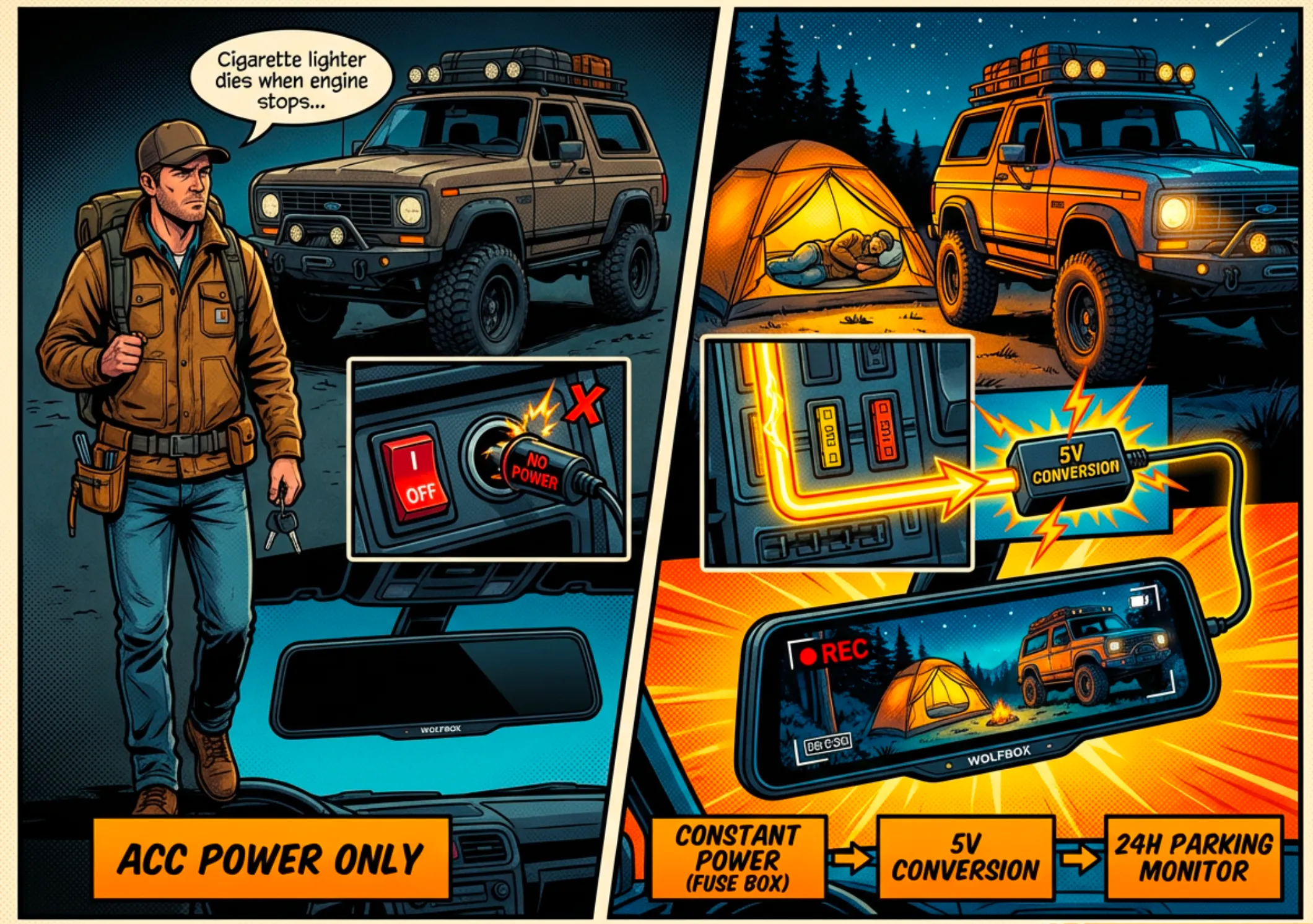
In many vehicles, the Cigarette Lighter (12V Socket) often turns off after the engine is off. If you want the dash cam to keep working while parked, the Hardwire Kit is a common setup.
It pulls power from the fuse box and converts the vehicle’s 12V/24V down to 5V, which enables the Parking Monitor function.
This comes up a lot in the community. Wolfbox Hardwire Kits include Smart Low Voltage Protection.
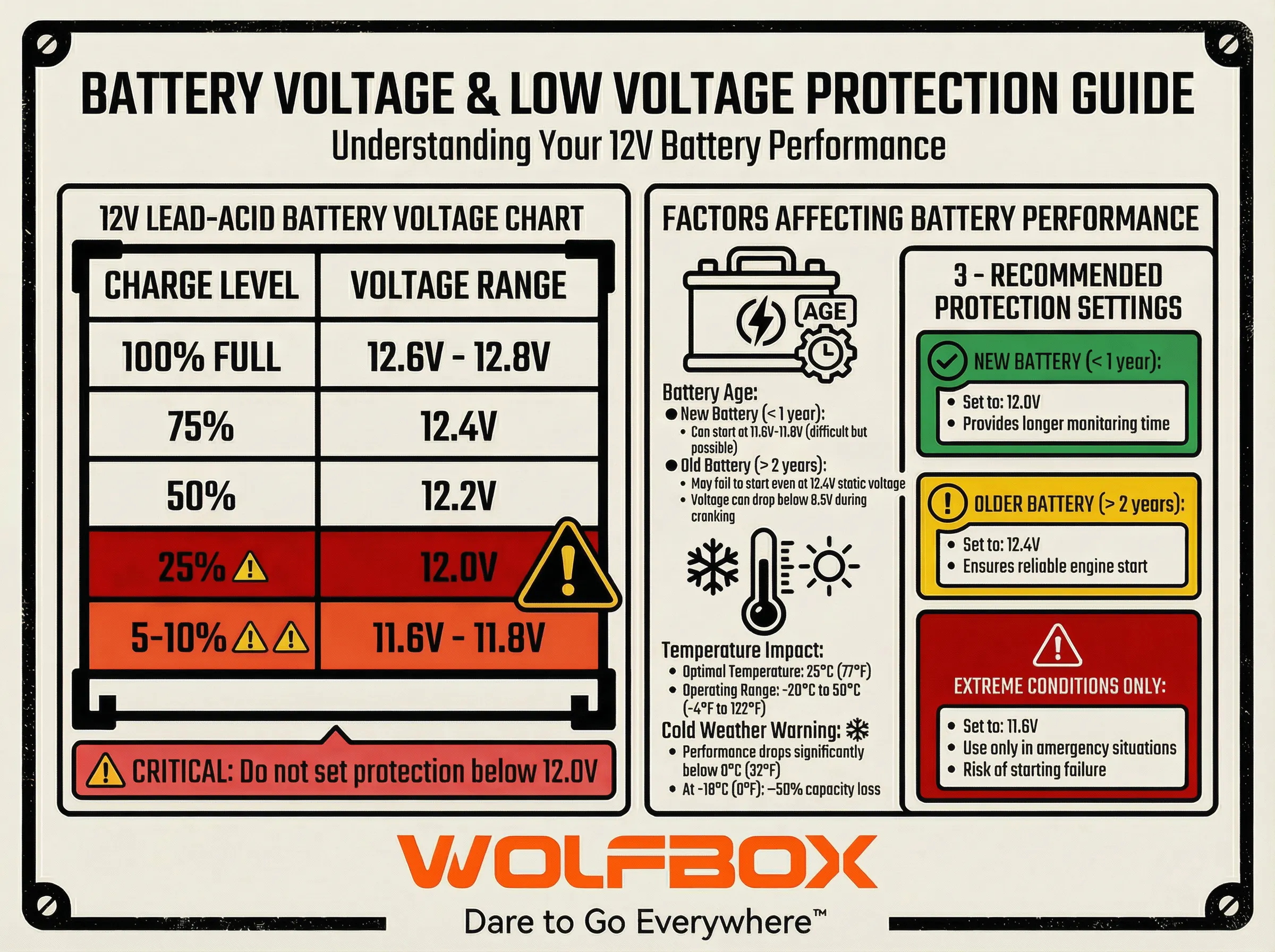
How it works: It monitors battery voltage. If it drops below your selected threshold (for example, 12.0V or 12.4V), it cuts power automatically.
Result: The dash cam stops recording to help preserve starting power.
⚠️ Note: With correct installation and reasonable settings, many users reduce the risk of draining the battery too low for starting. If your battery is older, temperatures are very low, or the vehicle sits for long periods, consider using a higher cut-off setting (12.4V) or an external power solution.
Another common question is whether tapping the fuse box can affect original circuits like seats or the radio. In general, when installed correctly, it should not.
Our Fuse Taps use a Parallel Circuit Design:
Dual-Slot Protection: One slot keeps the vehicle’s original fuse for the original circuit. The other slot holds the dash cam fuse.
Fault Isolation: If the dash cam circuit has a fault, the dash cam fuse is designed to blow first, while the original circuit remains protected by its original fuse.
If you are using a fuse tap, it is worth taking one extra minute to confirm the correct side of the fuse slot.
Case A: Existing Slot: Often straightforward, but it is still recommended to confirm the powered side.
Case B: Empty Slot: If you use an empty slot, orientation matters.
Steps:
Use a test light to identify which side is powered (Hot side).
Install the fuse tap so power feeds through the fuse correctly.
If you plug it in and get no power, rotate the fuse tap 180 degrees and test again.
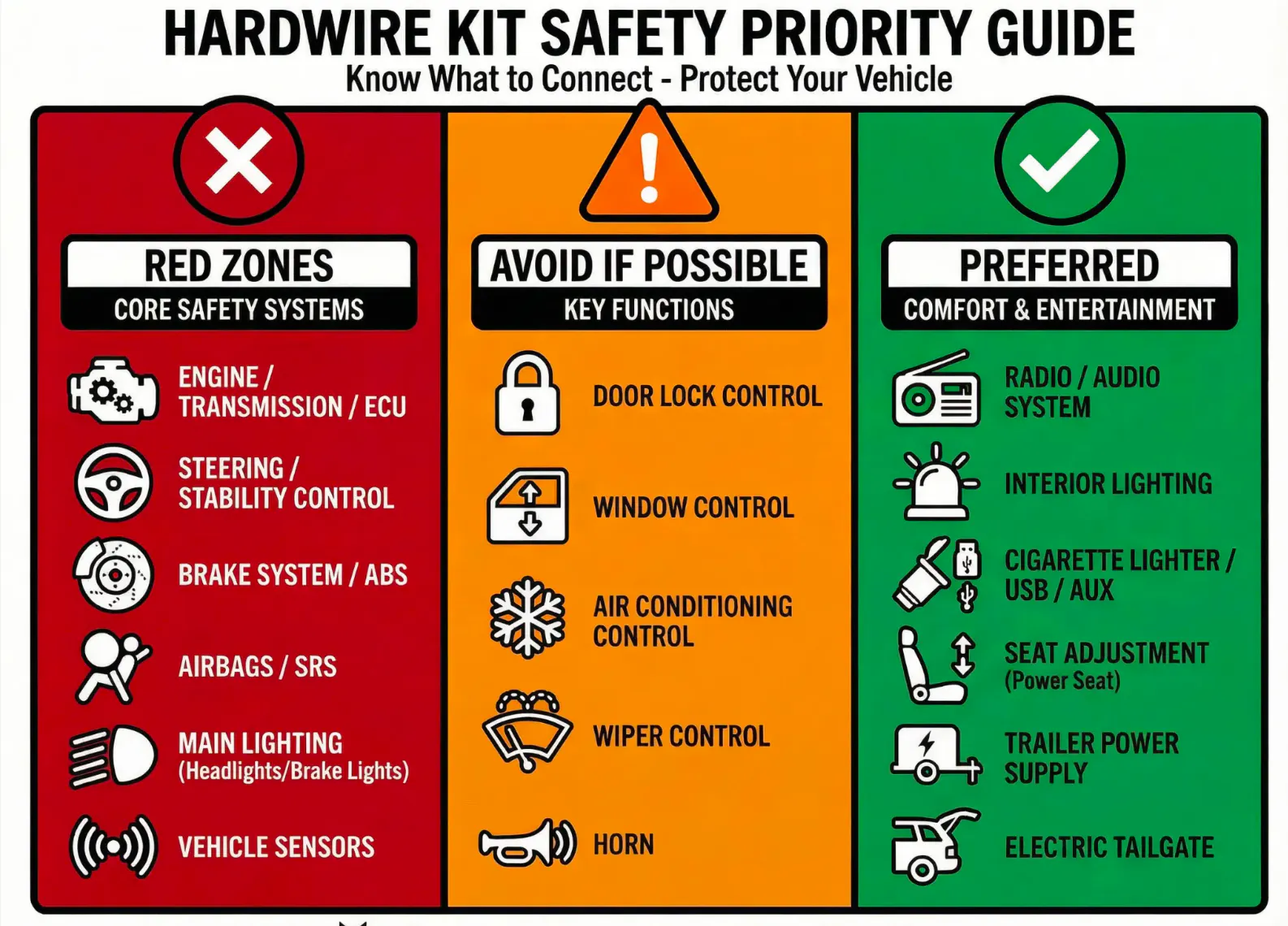
We recommend connecting to non-critical Comfort & Entertainment circuits. The wiring logic follows the Red-Yellow-Black setup.
Role: Provides main power for normal recording and supports Parking Monitor when parked.
Where to connect: A constant power fuse that stays powered when the key is removed.
Common choices: Electric tailgate, Trailer-related, Fuel cap / Fuel open, Interior lights, Power seat adjustment(excluding seat heating).
Role: Signal wire that tells the dash cam whether you are driving or parked.
Where to connect: An ACC fuse that has power only when the vehicle is on.
Common choices: ACC labeled circuits, Radio, Cigarette lighter, USB ports, Center console screen.
Role: Ground return.
Where to connect: A clean Metal Bolt on the chassis.
Note: Avoid plastic parts and rusty bolts.
Avoid fuses related to core vehicle driving and safety systems:
❌ Powertrain: Engine, Transmission, Fuel pump, ECU
❌ Safety: Airbag / SRS, ABS, Brake, Steering, Anti-theft alarm
❌ Critical: Sensors, Control Modules, Main lighting system (Headlights)
Always confirm with your Owner’s Manual and the fuse box diagram.
Ford Bronco (6th Gen): Often under the dash or near the Driver Side Kick Panel. Bronco doors are removable, so leave enough wire slack if routing near door areas.
Jeep Wrangler (JL) & Gladiator: Some installs route through the Firewall to the engine bay fuse box (PDC), or use Auxiliary Switch Wires (if equipped).
Toyota 4Runner (5th Gen): Often has multiple Empty Slots under the driver side dash. If you use an empty slot, follow the testing and orientation steps above.
These trucks often have more space around the fuse box.
If you tow an RV, avoid tapping the Trailer Brake Controller fuse.
Honda/Toyota: In many vehicles, Cigarette Lighter (CIG) is ACC only and can work for the Red wire. Some vehicles may label Central Door Lock as constant power. Always test before you connect.
Note: Some older vehicles (Ford/GM) may keep the Cigarette lighter as constant power. Always test before you connect.
Tesla / Rivian: For Parking Monitor, common setups use a dedicated harness or an external battery solution, since these vehicles may not provide a typical accessible fuse box for this type of accessory.
Standard Hybrids (Prius / RAV4 Prime): Similar to gas vehicles. Connect to the 12V battery fuse box system. This does not require accessing the high voltage traction battery.
Fuse layouts vary by vehicle. Use your Owner’s Manual.
If you are routing wires near the A-pillar, be cautious around airbag areas. If you are not confident, consider professional installation.
💬 Help a fellow driver out: If you could give one tip to someone installing this for the first time, what would it be? (e.g., "Buy a circuit tester!" or "Watch out for the A-pillar!"). Share your wisdom below!
