


This Article is Suitable for Which Readers
Dash camera comparison research users
Automotive electronics industry professionals
Image sensor technology enthusiasts
Wolfbox product users
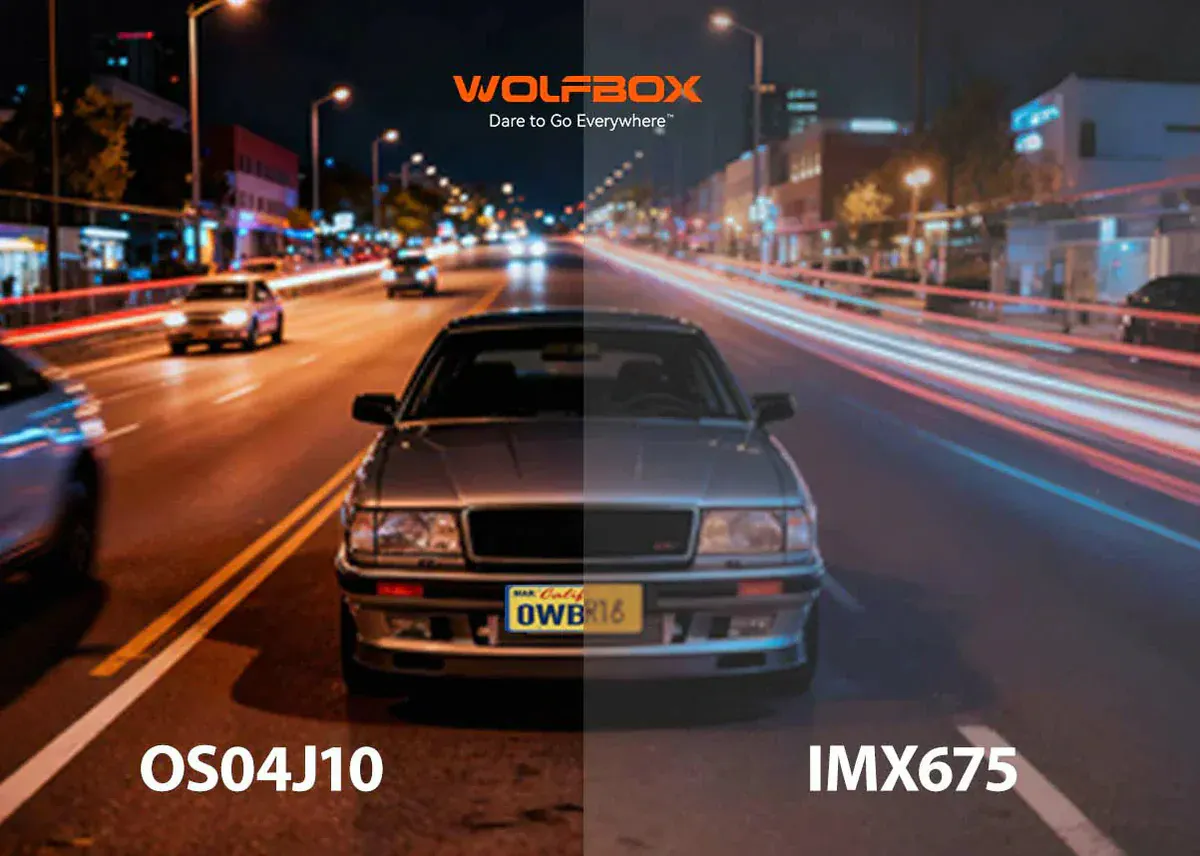
The primary benefit of a dash camera is its capacity to precisely record accident scenes at crucial times. The choice of image sensor, which is the central part of the imaging system, directly affects how well the product performs in complicated lighting situations.
When selecting between leading sensor solutions like Sony Starvis 2 IMX675 and OmniVision OS04J10, we chose the OmniVision OS04J10 sensor for our new generation rear camera module following several months of technical validation and more than a thousand miles of actual road testing by the Wolfbox engineering team. The engineering reasoning behind this choice will be methodically examined in this article from three perspectives: application situations, real-world test data, and technological concepts.
In a dash cam system, rear camera modules serve fundamentally different purposes than front-facing cameras, which directly impacts sensor selection criteria. Understanding these unique requirements is essential for evaluating sensor performance across real-world scenarios. Below, we break down the scenario differences and resulting technical priorities.
Unlike front cameras that typically face forward into ambient lighting, rear cameras operate in a challenging environment: constant exposure to trailing vehicle headlights, especially high beams at night. This fundamental difference means rear cameras require sensors with superior backlight handling and low-light sensitivity—not just as nice-to-have features, but as core functional requirements.
The working environment of rear camera modules differs fundamentally from front cameras. Based on extensive user data analysis, core application scenarios for rear cameras include:
Rear-end collision evidence: Clear license plate capture of trailing vehicles under daylight/nighttime/backlit conditions
Parking surveillance: Maintaining readable image quality in extremely dark environments such as parking garages
Lane change disputes: Simultaneous recording of vehicle information across left, center, and right lanes
Scratch and scrape evidence: Capturing vehicle colors, personnel features, and other details in low-light conditions
For more insights on differences and performance considerations, check out our front vs rear dash cam guide.
Based on the above scenario requirements, we established a technical evaluation model for rear camera sensors:
Technical Indicator
Application Scenario
Low-light brightness
Night driving, parking surveillance
Backlight performance
Direct trailing headlight glare, tunnel entrances/exits
Horizontal resolution
Multi-lane license plate simultaneous capture
Conclusion: The sensor's physical performance under low-light and mixed light source environments is the core evaluation dimension for rear camera selection.
Sensor
OS04J10
IMX675
Effective Pixels
4 Megapixels (4MP)
5 Megapixels (5MP)
Optical Format
1/1.88"
1/2.8"
Pixel Size
2.9μm
2.0μm
Photosensitive Area
31.2 mm²
20.3 mm²
Dynamic Range
Approximately 100–110 dB
Approximately 96dB
Shutter Type
Rolling Shutter
Rolling Shutter
Low-Light Performance
Bright and clean image with low noise
Balanced Tonal Range
Low-Light Sensitivity
⭐⭐⭐⭐⭐
⭐⭐⭐⭐
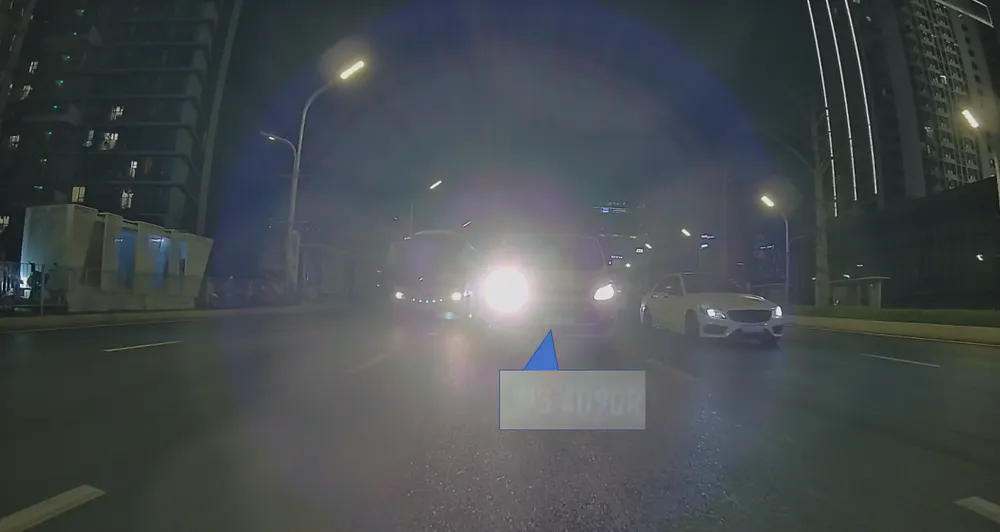
Dynamic Range Performance - OS04J10
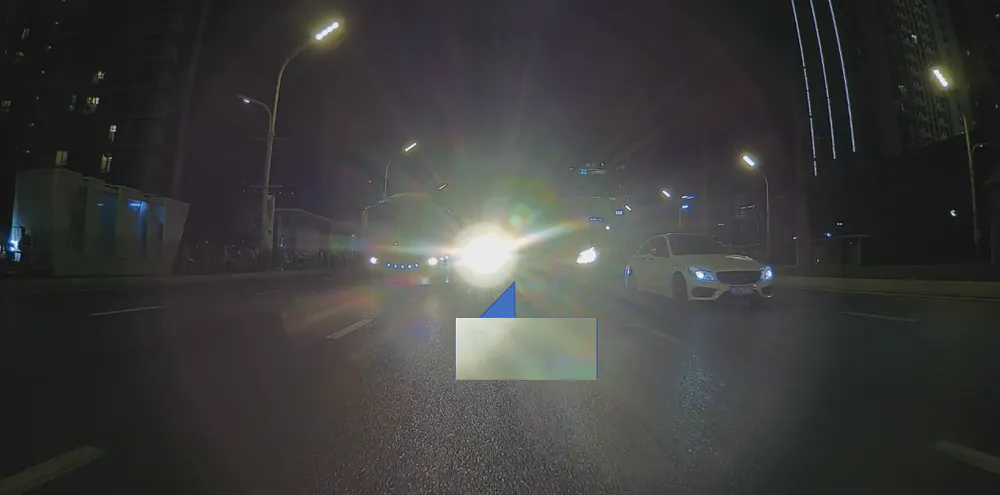
Dynamic Range Performance - IMX675
Photon capture efficiency:
The essence of sensor imaging is the process of converting photons into electrical signals. Pixel size directly determines the photon capture quantity per unit of time.
Using the analogy of collecting rainwater during a heavy storm:
Small containers (2.0μm): Many in number but small individual capacity
Large containers (2.9μm): Moderate in number but large individual capacity
In light-scarce nighttime environments, container opening size (pixel size) is more critical than container quantity (total pixels).
Technical principle:
Parameters
OS04J10
IMX675
Photosensitive area
1/1.88"
1/2.8"
Single pixel size
2.9μm
2.0μm
Relative photosensitive area
100%(Standard)
45%
Actual imaging effects:
Same exposure time: OS04J10 achieves higher signal strength → brighter image
Same brightness requirement: OS04J10 can shorten exposure time → reduce motion blur
Extremely dark environment: OS04J10 maintains lower noise level → cleaner image
The second core advantage brought by large pixels is higher signal-to-noise ratio. In actual dash camera usage, shadow detail retention capability is often more important than highlight detail:
Nighttime parking surveillance: Need to identify personnel activity in garage corners
Tunnel driving: Need to distinguish vehicles in interior tunnel lanes
Backlit scenarios: Need to restore license plate information in headlight shadow areas
Physical principle:
Small pixels under low light have high noise current proportion → obvious image grain
Large pixels capture more signal current → improved SNR → clear shadow detail
Test scenarios: Highways, urban roads, residential areas...
Test timeframes: Daytime bright light, dusk backlight...
Comparison method: Simultaneous dual-camera recording in same vehicle
Evaluation dimensions: License plate recognition rate, shadow detail, backlight suppression, horizontal resolution
Evaluation metric: Simultaneous clarity of left, center, and right lane license plates
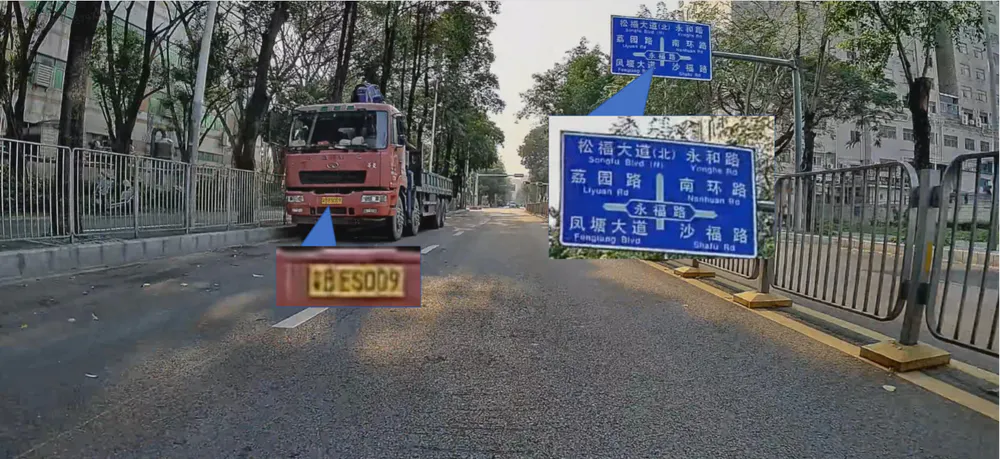
Daytime Multi-Lane License Plate Capture - OS04J10
All three lane plates clearly legible
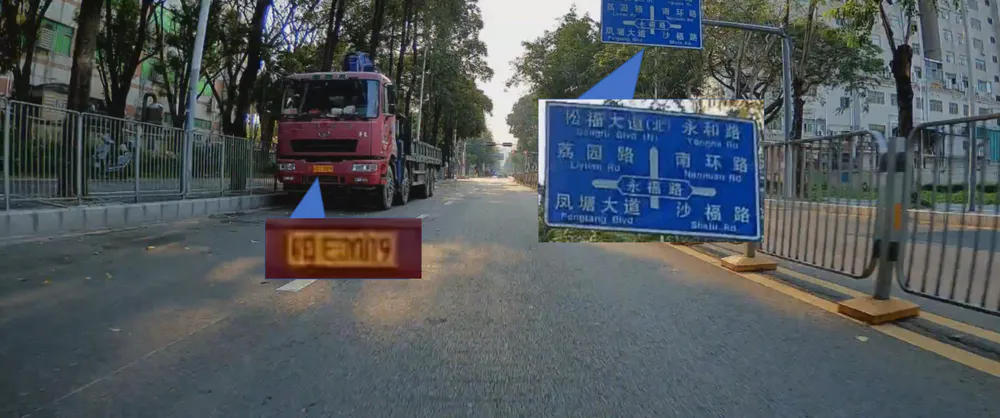
Daytime Multi-Lane License Plate Capture - Common solution
Center lane clear, left/right lane clarity decreased
Technical analysis:
OS04J10's advantage in horizontal resolution stems from:
Large pixels allow shorter exposure time → reduced lateral motion blur
Large sensor area reduces diffraction loss → more uniform edge quality
Higher signal-to-noise ratio → stronger resolving power for angled plates
Application value: In lane-change dispute scenarios, simultaneous clear recording of multi-lane information provides a more complete evidence chain.
Test conditions: Urban nighttime roads
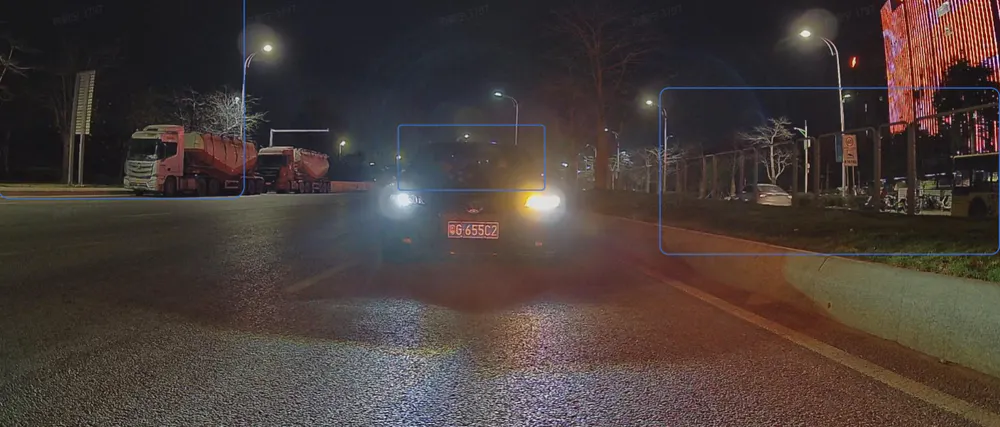
Urban nighttime roads - OS04J10
License plate area clear, good backlight control
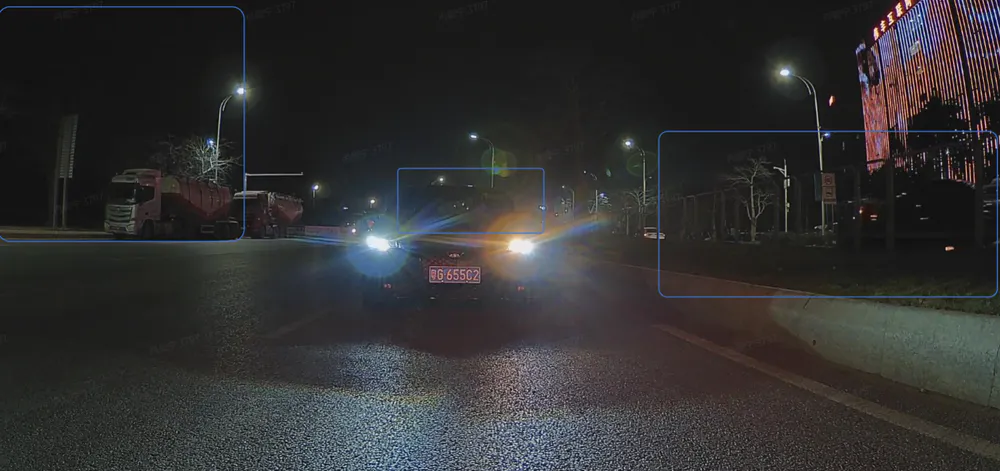
Urban nighttime roads - IMX675
Common solution - License plate area overexposed, detail loss
Technical analysis:
Nighttime backlight is the most demanding test of a sensor's charge management capability:
Full well capacity: Large pixels have higher charge storage ceiling → highlights don't overflow
Photon capture efficiency: Maintains adequate signal even in reflective areas → license plate detail preserved
Application value: In rear-end collision accidents, backlight is the most common scenario. This capability directly determines evidence validity.
After extensive road testing across diverse scenarios, the performance differences between the OmniVision OS04J10 and Sony Starvis 2 IMX675 become clear:
For rear dash camera applications where nighttime usage exceeds 50% and parking surveillance is essential, OS04J10's large pixel architecture delivers measurably better results in the scenarios that matter most. The IMX675 remains an excellent choice for front cameras or applications prioritizing daytime HDR and high-frame-rate capture.
This isn't about one sensor being universally superior—it's about matching sensor characteristics to real-world usage patterns.
Not necessarily, under the premise of the same sensor area. The number of pixels is sufficient, and the quality of a single pixel is more critical.
It needs to match a larger lens, but the impact on the rear camera module is controllable.
The fundamental difference lies in pixel size and optimization focus.
Neither is universally "better",the optimal choice depends on application requirements.
The Wolfbox engineering team now has a better understanding thanks to the choice of secondary sensor:
A great product is not a stack of the priciest elements, but rather one that lets each component contribute as much as possible to the adaptation scenario.
The idea that "real and reliable is better than parameter stacking" is what Wolfbox follows while choosing imaging solutions.
Therefore, rather than focusing solely on paper specifications, we pay greater attention to the stability of sensors under real, complex lighting conditions in the new generation of products. Through systematic technical validation and extensive road testing, we've demonstrated why the OmniVision OS04J10 emerged as the optimal choice for rear dash camera applications. While the Sony Starvis 2 IMX675 offers excellent performance in high-speed capture and HDR scenarios, the OS04J10's large pixel design and superior low-light performance align precisely with the real-world conditions rear cameras encounter most frequently—nighttime driving, parking surveillance, and backlit situations.
Thank you for reading this technical analysis article.
